
Skill and ability are foundational concepts in sports psychology and skill acquisition, often used interchangeably but possessing distinct meanings in physical education. Understanding the relationship between the two is crucial for coaches and educators when identifying talent and designing effective training programs.
An ability is an enduring, stable, and largely genetically determined trait that underpins and supports the development of skills. Abilities are the innate "building blocks" or raw capacity an individual is born with, such as reaction time, hand-eye coordination, flexibility, and spatial awareness. Because they are genetically inherited, abilities are difficult to change significantly through training alone. Instead, they serve as the foundation upon which an athlete's potential is built; an individual with high natural coordination and power has a greater capacity to excel in fast-paced, explosive sports.
A skill, on the other hand, is the learned and practiced ability to bring about predetermined results with maximum certainty and minimum outlay of time and energy. Unlike abilities, skills are not inherited; they must be acquired through experience, coaching, and deliberate practice. Examples of skills include a tennis serve, a football pass, or a gymnastics handstand. A skill represents the efficient mobilization of an athlete's underlying abilities to achieve a specific sporting goal smoothly and consistently.
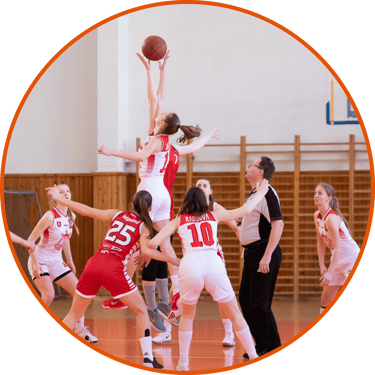
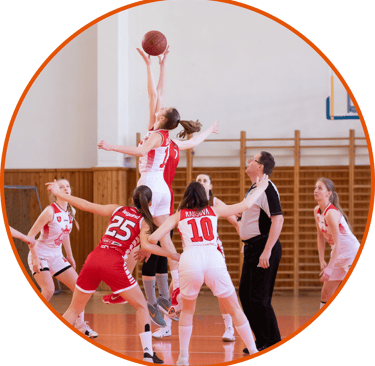
To illustrate the connection, consider a basketball player executing a layout or a clean chest pass. The player's success relies on their learned skill (the specific technique of the pass or shot), which is entirely supported by their underlying, innate abilities (such as their natural peripheral vision, reaction time, and explosive leg power). Without the foundational abilities, mastering the complex skill is exceptionally difficult; without learning the skill, the raw genetic ability remains unfulfilled potential.
UNIT 5: SKILL & ABILITY

5.2
Abilities
5.1
Classification of Skills